Text to emote
A sentence in, an emote out: sona_emote_from_text picks stock clips
with blend weights, a playback speed and a face, and sona_avatar_emote plays them. It is part of the core library
(sona.h), with no ctx and no network: the same text always gives the same answer. Agents get the
same through MCP's emote_from_text tool.
sona_emote e;
memset(&e, 0, sizeof e);
e.size = sizeof e;
/* wave 74%, celebrate 26%, speed 1.25, a happy face */
sona_emote_from_text("wave excitedly", &e);
if (e.count || e.expression[0] != 255)
  /* fades in over a quarter second */
  sona_avatar_emote(avatar, &e, 0.25f);
sona_emote e;
// wave 74%, celebrate 26%, speed 1.25, a happy face
sona::emote_from_text("wave excitedly", e);
if (e.count || e.expression[0] != 255)
  // fades in over a quarter second
  avatar.emote(e, 0.25f);
var e = new Native.sona_emote { size = (uint)sizeof(Native.sona_emote) };
fixed (byte* text = System.Text.Encoding.UTF8.GetBytes("wave excitedly\0"))
    // wave 74%, celebrate 26%, speed 1.25, a happy face
    Native.sona_emote_from_text(text, &e);
if (e.count > 0 || e.expression[0] != 255)
    // fades in over a quarter second
    Native.sona_avatar_emote(avatar.Handle, &e, 0.25f);
// wave 74%, celebrate 26%, speed 1.25, a happy face
let e = emote_from_text("wave excitedly")?;
if e.count > 0 || e.expression[0] != 255 {
    // fades in over a quarter second
    avatar.emote(&e, 0.25)?;
}
# wave 74%, celebrate 26%, speed 1.25, a happy face
e = sona.emote_from_text("wave excitedly")
# fades in over a quarter second
avatar.emote(e, 0.25)
How a sentence is read
Words are matched against a table of 132 action and mood words and 20 manners, after taking off -ing, -ed and -s
(waving, clapped, laughs):
- Actions name a clip: wave, hello, bye, clap, cheer, celebrate, raise your arms, fist pump, pick me, laugh, angry, shrug, not sure, cry, shocked, wow, yawn, sleep, stretch, dance, spin, jump, look around, look up, punch, kick, sit, faint, stumble, talk and more. Two-word actions ("look around", "not sure") may have a word between them ("raise your arms").
- Moods give the face: happy, smile, frown and the moods the actions carry (laugh is laughing, cry is sad).
- Manners change an action: excitedly (faster, with some celebrate in it), slowly and gently (slower), sadly and angrily (the mood, and a little of that clip), nervously and awkwardly. "!" makes it a little faster.
- Very, really and so make the next action count for more; not, don't and never turn the next action within three words off ("don't dance" picks nothing).
The four heaviest clips are kept, their weights summing to 1. confidence is how sure the strongest word makes it
(0.5 and up for a plain action word). Nothing matched: count 0 and confidence 0. A mood with no action ("smile")
gives count 0 with a face.
Clips made for one body (laugh_female, laugh_male) are named once; sona_avatar_emote plays the avatar's own
body's variant, as sona_avatar_play_stock does.
Playing it
sona_avatar_emote blends the clips on the emote layers, the top ones (SONA_LAYER_MAX - count to
SONA_LAYER_MAX - 1, so layers 4 to 7 at most): each layer blends over the ones below by its share of the weight so
far, which gives every clip its own weight in the end. Layers below 4 stay the game's. An emote never stops a
layer the game played: when one sits where the emote would go, sona_avatar_emote answers SONA_E_LIMIT and
changes nothing, and an emote that needs fewer layers leaves the game's lower ones playing. A layer the emote played
is the game's again once the game plays anything on it, even the same clip. Out of memory, the call answers
SONA_E_MEMORY and changes nothing: the clips and layers are held before any layer or the face changes. An emote
plays once and hands back to the clip, except what goes on until stopped (a dance, sleep, a hover, a run), which loops until the next
emote. The face, when the emote has one, stays until the next emote; an emote with count 0 and no face stops the
emote layers and hands the face back to the clip.
Faces on the web
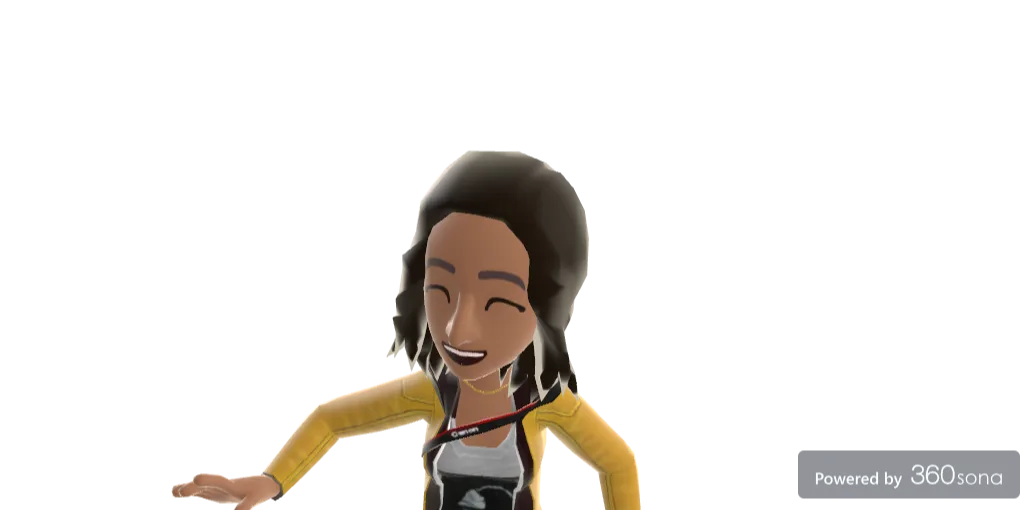
The web SDK has no text-to-emote. Its clips carry their faces: a laugh opens the mouth and closes the eyes, a shock raises the eyebrows. The bust framing shows them close, with room for the head to move:
import { SonaRenderer } from './sona-renderer.js';

const canvas = document.querySelector('canvas');
const sona = await SonaRenderer.create({ canvas });
const avatar = sona.add(manifestBase64, { clip: 'Laugh' });
await avatar.ready;
sona.camera.preset('bust', avatar);
await new Promise((done) => setTimeout(done, 3000));
for (const clip of ['ShockedSurprised', 'Angry', 'SadCry']) {
  await avatar.play(clip);
  await new Promise((done) => setTimeout(done, 3000));
}
MCP
emote_from_text {text, body?} answers with the clips (name, family, clip id, caption, weight), the speed, the
confidence and the face (its mood and shape numbers). With body set to male or female the clip names are that
body's variants. render_avatar with a clip's id as clip shows a frame of it.
This page as Markdown · All the docs as one file (llms-full.txt)